1. Introduction
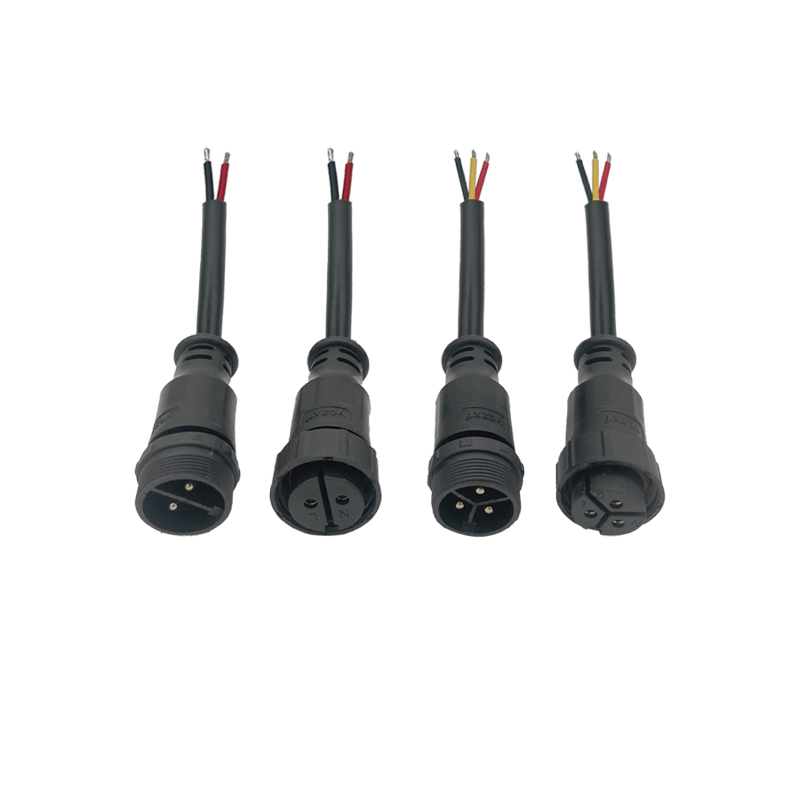
In the era of industrial digitization and outdoor equipment popularization, the demand for connectors that can withstand extreme environmental factors—such as moisture, dust, vibration, and temperature fluctuations—continues to rise. M20 waterproof connectors have emerged as a preferred solution for engineers and manufacturers, thanks to their standardized 20mm thread design, robust sealing performance, and broad compatibility. Unlike smaller M16 connectors, M20 variants offer higher current-carrying capacity and larger cable diameter support, making them suitable for medium-power applications and harsh scenarios where reliability is non-negotiable. From solar farms to marine vessels, from factory automation lines to outdoor LED installations, M20 waterproof connectors serve as the backbone of stable electrical connections, minimizing downtime and ensuring operational safety.
2. Structural Design and Material Advantages
The superior performance of M20 waterproof connectors is rooted in their precision engineering and high-grade material selection, which work together to achieve exceptional environmental resistance and mechanical stability.
2.1 Core Structure
A typical M20 waterproof connector consists of four key components: the shell, insulator, contacts, and sealing system. The shell features a 20mm metric thread (M20x1.5 is common) with a self-locking screw mechanism, ensuring a secure fit even under high vibration (up to 15g). The sealing system, composed of silicone or nitrile rubber (NBR) O-rings and thermoplastic elastomer gaskets, creates a hermetic barrier against water and dust, achieving IP68 protection for prolonged submersion (up to 4 meters for 120 hours in some models) . The insulator, made of polycarbonate (PC) or nylon PA66 with UL94 V-0 flammability rating, ensures reliable electrical isolation and resistance to high temperatures .
2.2 Material Selection
Shell materials vary by application: nickel-plated brass and electroless nickel-plated brass are preferred for corrosion resistance in marine and industrial environments, while zinc die-cast with powder coating offers cost-effectiveness for general use . High-performance engineering plastics (PA66) are widely adopted for lightweight and chemical-resistant requirements, such as outdoor lighting and solar equipment . Contacts are typically made of copper alloy (phosphor bronze or brass) with tin or gold plating, minimizing contact resistance (≤10 mΩ) and enhancing conductivity . For explosion-proof scenarios, ATEX-rated M20 connectors use stainless steel and aluminum components to meet safety standards in combustible facilities .
3. Key Specifications and Performance Metrics
M20 waterproof connectors offer flexible configurations to accommodate diverse application needs, with core specifications varying by model:
Electrical Parameters: Rated voltage ranges from 250V to 450V, and rated current from 5A to 35A, supporting wire gauges of 0.3mm² to 4.0mm² . Specialized variants for power transmission can handle up to 24A at 450V, suitable for high-power LED lamps and solar inverters .
Environmental Adaptability: Operating temperature spans -40℃ to +105℃ for standard models, with extreme variants extending to -60℃ to +130℃ for harsh cold or high-heat environments . They resist corrosion, UV radiation, and chemical exposure, making them ideal for coastal, industrial, and outdoor settings.
Mechanical Performance: Mating cycles range from 500 to 3000 times, with a tightening torque of 0.25Nm to 3.5Nm to ensure stable locking . Cable diameter compatibility is 3.2mm to 12mm, supporting both unarmored and braided cables .
Certifications: Compliance with CE, ROHS, UL, VDE, and ATEX standards ensures global applicability, meeting safety and environmental requirements for industrial, automotive, and marine sectors .
4. Wide-Ranging Application Scenarios
The versatility of M20 waterproof connectors makes them indispensable across multiple industries, leveraging their robust performance to solve connectivity challenges in harsh environments:
4.1 Outdoor Lighting and LED Systems
M20 connectors are widely used in LED street lamps, garden lights, and plant grow lights, supporting tool-free push-wire or screw lug wiring for easy installation . Their IP67/IP68 rating and -40℃ to +105℃ operating temperature resistance ensure stable performance in rain, snow, and extreme temperature fluctuations .
4.2 Solar Energy and Renewable Systems
In solar panels, inverters, and energy storage equipment, M20 connectors handle medium-power transmission, resisting UV radiation and outdoor humidity . They support cable diameters of 5mm to 12mm, adapting to the wiring needs of solar energy systems and ensuring long-term reliability in open-air installations.
4.3 Industrial Automation and Machinery
M20 connectors connect sensors, actuators, and PLCs in factory automation lines, with vibration resistance and dustproof performance ensuring uninterrupted signal transmission . Explosion-proof variants are used in combustible industrial environments, complying with ATEX and IECEx standards .
4.4 Marine and Coastal Equipment
Corrosion-resistant nickel-plated brass and IP68-rated M20 connectors are ideal for shipboard electronics, deep-sea sensors, and coastal infrastructure, protecting against saltwater ingress and high pressure .
5. Installation and Maintenance Best Practices
Proper installation and maintenance are critical to maximizing the service life and performance of M20 waterproof connectors:
Pre-Installation Inspection: Check for damage to the shell, O-rings, and contacts. Ensure the sealing ring is intact and free of debris to maintain waterproof performance.
Wiring Guidelines: Strip cables to 10-12mm (exposing 5mm of copper wire) and crimp or solder contacts securely. Match wire gauge to the connector’s rating (0.3mm²-4.0mm²) to avoid overheating .
Locking Operation: Align the thread correctly and tighten the locking cap to the recommended torque (0.25Nm-3.5Nm) to engage the seal fully. Avoid over-tightening to prevent damage to the O-ring .
Regular Maintenance: Clean contacts periodically to remove dust and oxidation. Inspect seals for aging or cracks and replace them if necessary to maintain IP rating. Avoid connecting or disconnecting under load to prevent contact damage .
6. Conclusion
M20 waterproof connectors combine standardized design, robust material selection, and versatile performance to meet the connectivity needs of harsh environments. Their IP65-IP68 protection, wide temperature range, and compliance with international certifications make them a reliable choice for outdoor lighting, solar energy, industrial automation, and marine applications. As industries continue to demand higher durability and safety, M20 connectors are evolving with miniaturized designs, enhanced current capacity, and smart monitoring features, solidifying their position as a core component in modern electrical systems. By following proper installation and maintenance practices, users can maximize the service life of M20 waterproof connectors and ensure uninterrupted operation in even the most challenging conditions.