

Isolating the Axis: Heavy-Duty M16 Polymer Cores for Industrial Welding Robots
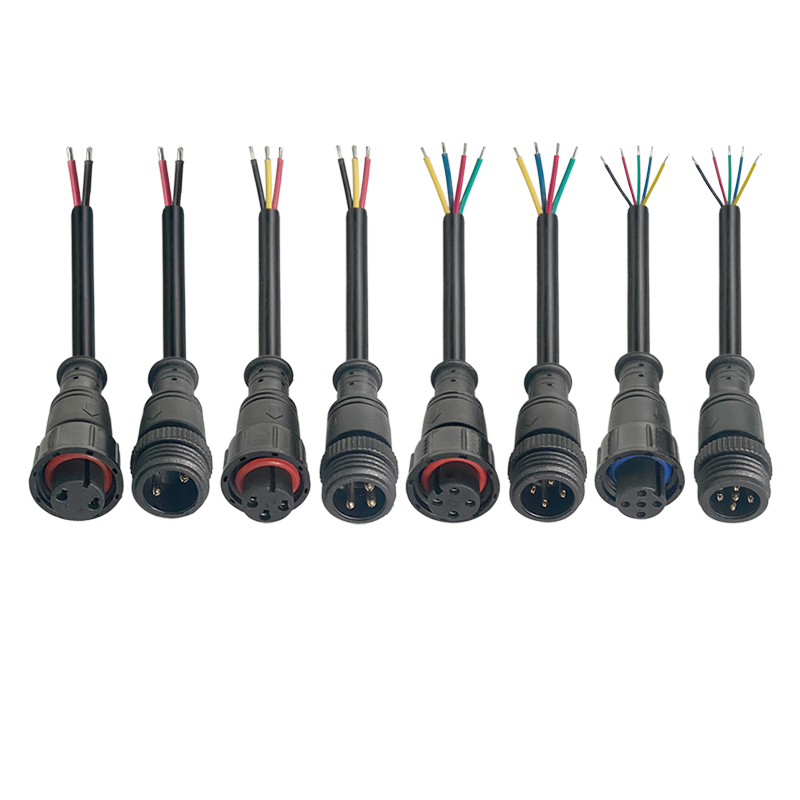
Automotive manufacturing lines and heavy industrial fabrication rely entirely on 6-axis industrial robotic arms for precision spot welding and arc welding. To calculate exact spatial positioning, each of the robot's six servo motors must constantly feed high-resolution encoder data back to the central controller. Because routing space through the robotic joints is highly restricted, engineers use the M16 Circular Connector to consolidate up to 24 pins of servo and limit-switch data into a single, compact plug.
However, operating on the wrist of a welding robot is brutally abusive. The connector is subjected to violent, high-acceleration multi-axis movement, intense radiant heat, and massive electromagnetic interference (EMI) from the welding torch. In this environment, the most critical component is the internal polymer core (insulator). Cheap plastic cores allow the 24 tightly packed pins to vibrate (causing micro-fretting) and lack the dielectric strength to prevent high-voltage welding noise from bleeding into the delicate encoder signals. To survive the extreme physics of robotic welding, automation OEMs specify the advanced dielectric architecture of PINA GUARD’s heavy-duty M16 series connectors.
The Extreme Demands of Multi-Axis Servo Control
Wiring 24 pins of critical servo data inside a fast-moving robotic joint involves devastating mechanical and electrical challenges:
High-Frequency Vibration and Micro-Fretting: As the robotic arm violently accelerates and stops, the connector experiences severe G-forces. Cheap M16 plastic cores lack structural rigidity, allowing the 24 internal pins to vibrate against each other. This "micro-fretting" strips the gold plating off the pins, causing intermittent servo data drops that crash the robot.
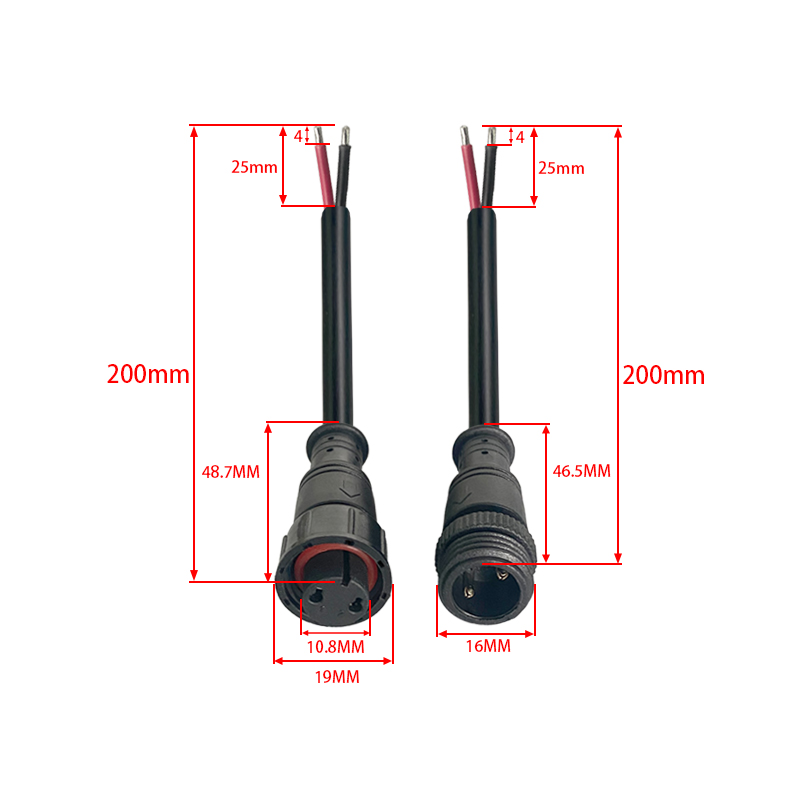
Dielectric Crosstalk from Welding EMI: Packing 24 pins into a 16mm diameter means the plastic walls separating the pins are incredibly thin. Low-grade M16 plastic cores have poor dielectric strength. When the welding torch arcs, it generates massive electrical noise that easily punches through cheap plastic, causing crosstalk between the pins and confusing the robot's positioning logic.
Thermal Degradation: Radiant heat and flying welding slag rapidly degrade standard nylon inserts, causing them to turn brittle and crack under the constant twisting of the robotic arm.
The PINA GUARD "Dielectric Defense" for Robotic Automation
To keep the robotic servos positioned with absolute precision, PINA GUARD engineers internal M16 polymer cores that treat violent acceleration and severe EMI as the baseline standard.
1. Vibration-Proof Pin Seating to Eliminate FrettingWe reject the loose tolerances of standard field-wireable plugs. PINA GUARD’s multi-pin M16 polymer cores are precision-molded to grip our 100% soldered pins with uncompromising rigidity. Even when subjected to the violent, high-speed whipping of a 6-axis robotic wrist, the 24 pins inside our core remain completely immobilized. This eliminates micro-fretting, preserving the gold plating and ensuring flawless servo feedback.
2. Supreme Dielectric Isolation Against Welding NoiseInside every PINA GUARD robotic connector, we utilize premium, high-temperature polymer inserts with exceptional dielectric strength. Despite the microscopically thin walls between the 24 pins, our highly engineered plastic core provides absolute electrical isolation. This prevents high-voltage welding noise from bleeding across the pins, ensuring your servo encoders operate with sub-millimeter reliability.
3. Flame-Retardant and High-Heat Structural IntegrityPINA GUARD utilizes specialized, flame-retardant (UL94 V-0) polymers for our M16 cores. They are engineered to resist the radiant heat of continuous arc welding, ensuring the core will not warp, melt, or lose its structural grip on the pins even in the hottest fabrication environments.
Maintain Absolute Axis Precision
In automotive and industrial robotics, a dropped encoder signal due to internal pin vibration can cause a robotic collision, destroying expensive tooling and halting the assembly line. Do not let a cheap internal insulator cripple your automation. Upgrade your robotic arms with the unshakeable, highly isolated M16 polymer cores from PINA GUARD.